
Kimchi has been enjoyed for centuries in Korea. But the spicy fermented cabbage dish has recently gained popularity in other parts of the world not only because of its delicious taste, but because of its potential to positively influence the…
by S & T • • Commentaires fermés sur La toile d’araignée : merveille d’ingénierie naturelle depuis 400 millions d’années
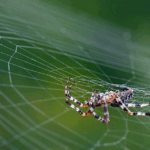
Elles peuvent inquiéter ou être balayées d’un revers de la main : les toiles d’araignées sont en réalité des merveilles d’ingénierie naturelle. Leur architecture, aussi variée qu’ingénieuse, répond à des fonctions précises : capturer des proies, protéger des œufs, amortir une chute…
by S & T • • Commentaires fermés sur Some pro athletes keep getting better as they age − neuroscience can explain how they stay sharp
In a world where sports are dominated by youth and speed, some athletes in their late 30s and even 40s are not just keeping up – they are thriving. Novak Djokovic is still outlasting opponents nearly half his age on…
by S & T • • Commentaires fermés sur The key to a centenarian’s long life may be their superhuman ability to avoid disease – new research
Humans may be living longer on average these days, but, even so, only a fraction of us will live to see our 100th birthday. Yet the reasons why only a select few will become centenarians still remains a mystery to…
by S & T • • Commentaires fermés sur Un microscope intelligent prédit les signes de neurodégénérescence
Des scientifiques de l’EPFL ont mis au point un microscope autonome capable de prédire le début de l’agrégation de protéines mal repliées – caractéristique des maladies neurodégénératives – et d’analyser les propriétés biomécaniques de ces agrégats. L’accumulation de protéines mal…
by S & T • • Commentaires fermés sur Research replication can determine how well science is working – but how do scientists replicate studies?
Back in high school chemistry, I remember waiting with my bench partner for crystals to form on our stick in the cup of blue solution. Other groups around us jumped with joy when their crystals formed, but my group just…
by S & T • • Commentaires fermés sur Guineafowl can outsmart extreme temperatures: we spent a year finding out how
Have you ever wondered how wild birds cope with baking hot afternoons and freezing cold mornings? Our new study has taken a close look at one of Africa’s most familiar birds – the helmeted guineafowl – and uncovered surprising answers…
by S & T • • Commentaires fermés sur Cycling can be 4 times more efficient than walking. A biomechanics expert explains why
You’re standing at your front door, facing a five kilometre commute to work. But you don’t have your car, and there’s no bus route. You can walk for an hour – or jump on your bicycle and arrive in 15…
by S & T • • Commentaires fermés sur Polémica científica: ¿y si las cinco grandes extinciones masivas no fueron tales?
La historia evolutiva de la vida en la Tierra no ha sido gradual ni continua. A lo largo de cientos de millones de años, ocurrieron grandes catástrofes que provocaron la desaparición rápida y global de muchas especies. Estos episodios, conocidos…
by S & T • • Commentaires fermés sur Pourquoi avons-nous un coccyx et pas une queue ?
L’absence de queue chez l’humain et les grands singes constitue une des évolutions anatomiques les plus intrigantes. La majorité des mammifères arbore une queue fonctionnelle mais les hominoïdes (humains, gorilles, chimpanzés, etc.) ne possèdent qu’un vestige : le coccyx. Cette particularité…